
Historical Perspective: Evolution of Dietary Understanding
Tracing how human understanding of nutrition has developed throughout history
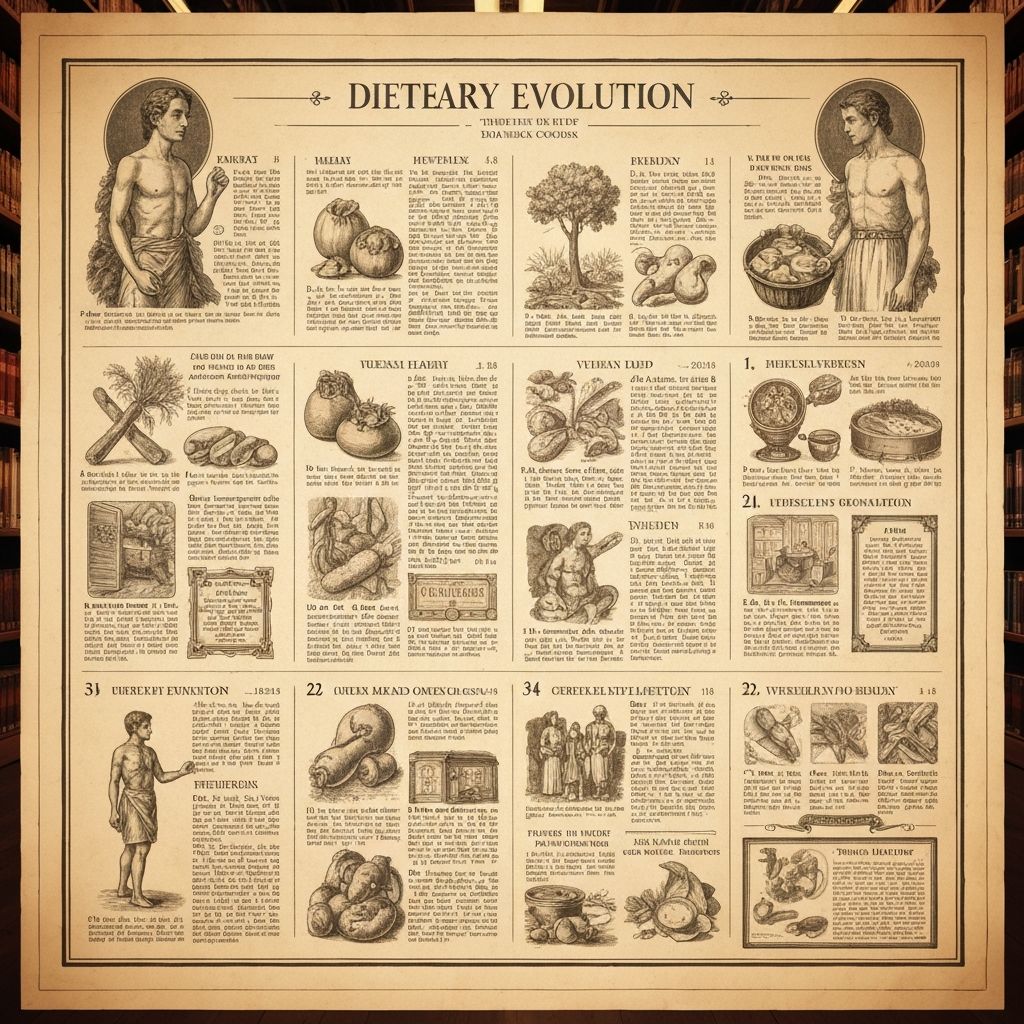
Ancient Perspectives on Food
Throughout human history, food has held significance beyond mere survival. Ancient civilizations developed practices and beliefs around eating based on observation and experience. Traditional eating patterns across cultures—Mediterranean, Asian, Indigenous—developed over centuries through observation of what promoted health and sustained energy.
Many of these traditional patterns contain principles validated by modern nutritional science: emphasis on whole foods, plant foods, and balance rather than excess. While lacking scientific explanation, traditional diets often optimized available foods in ways that supported health.
Scientific Origins: The 1800s and 1900s
The scientific study of nutrition began in earnest during the 1800s. Scientists developed the ability to measure and analyze food composition. The discovery of macronutrients—carbohydrates, proteins, and fats—was a revolutionary breakthrough, fundamentally changing how food could be understood scientifically.
Early nutritional scientists focused on these energy-providing macronutrients, developing the concept of calories as a unit of energy. This understanding provided a framework for thinking about food beyond observation—actual measurement and comparison became possible.
The Vitamin Era: 1900s-1950s
A major shift in nutritional science came with the discovery of vitamins. Scientists identified specific substances in food that prevented diseases—vitamin C preventing scurvy, vitamin D preventing rickets, vitamin B1 preventing beriberi. This discovery revealed that food contained specific micronutrients with precise functions in preventing disease and supporting health.
As vitamins were discovered and catalogued, the understanding of food transformed. Beyond providing energy (macronutrients), food provided essential substances (vitamins and minerals) necessary for survival and optimal function. This shifted focus from simple calorie counting to nutritional completeness.
Modernization and Refinement: 1950s-1980s
Post-World War II prosperity and industrial food production transformed eating patterns, particularly in Western countries. Processed foods, refined ingredients, and convenience foods became dominant. Simultaneously, new health challenges emerged—heart disease, diabetes, and obesity increased.
Nutritional science adapted, investigating connections between diet and chronic disease. The role of saturated fats, cholesterol, salt, and sugar in cardiovascular disease and diabetes became research foci. Dietary guidelines began recommending reduced fat intake and increased vegetable consumption based on this emerging evidence.
The Fat Debate: 1970s-1990s
A significant emphasis on reducing fat—particularly saturated fat—characterized this era. This led to the development of low-fat and fat-free processed foods, often with added sugar to improve taste. Over time, research nuanced this perspective, revealing that fat quality matters more than fat quantity, and that refined carbohydrates and added sugars posed their own health challenges.
Vitamins discovered and studied. Food transformed from energy source to provider of specific health-supporting substances.
Connections between diet and chronic disease identified. Focus shifts to dietary patterns and overall health promotion.
Understanding of macronutrient quality expands. Recognition that not all fats are equal; not all carbohydrates are equal.
Microbiome research, nutrient bioavailability, personalized nutrition, and genetic factors become research frontiers.
Contemporary Developments
Modern nutritional science has become increasingly sophisticated. The discovery of the human microbiome—trillions of bacteria in the digestive system affecting health—opened entirely new research areas. Scientists investigate how different foods affect gut bacteria composition and how this influences health.
Nutrient bioavailability—the degree to which the body can absorb and utilize nutrients from different sources—has become important. This explains why food quality matters beyond simple nutrient content. A processed food providing similar nutrients to a whole food may not provide the same health benefit.
Personalized nutrition—understanding how individual genetic factors, microbiome composition, and other factors influence nutritional needs—represents a frontier in nutritional science, suggesting that optimal nutrition may vary among individuals.
Themes Across History
Despite dramatic changes in nutritional knowledge, certain themes persist. Whole foods consistently outperform processed foods. Diversity in food sources provides more complete nutrition than limited options. Moderation and balance appear repeatedly across cultures and eras. Prevention through diet is consistently more effective than attempting to treat disease through food alone.
The Future of Nutritional Understanding
Nutritional science continues evolving. Emerging research explores the role of specific compounds (phytonutrients), the impact of food preparation methods on nutrient availability, and the interaction of diet with sleep, stress, and physical activity. Understanding food's role in health remains a dynamic, developing field.
What remains clear across the entire history of nutritional science is this: how we eat matters for our health. The specific mechanisms have become better understood, but the fundamental truth has been recognized for centuries.
Important Note: This article is for educational purposes, providing historical context for understanding nutritional science. It is not a substitute for current medical or nutritional advice. For guidance about your personal nutrition, consult a qualified healthcare provider or registered dietitian.